

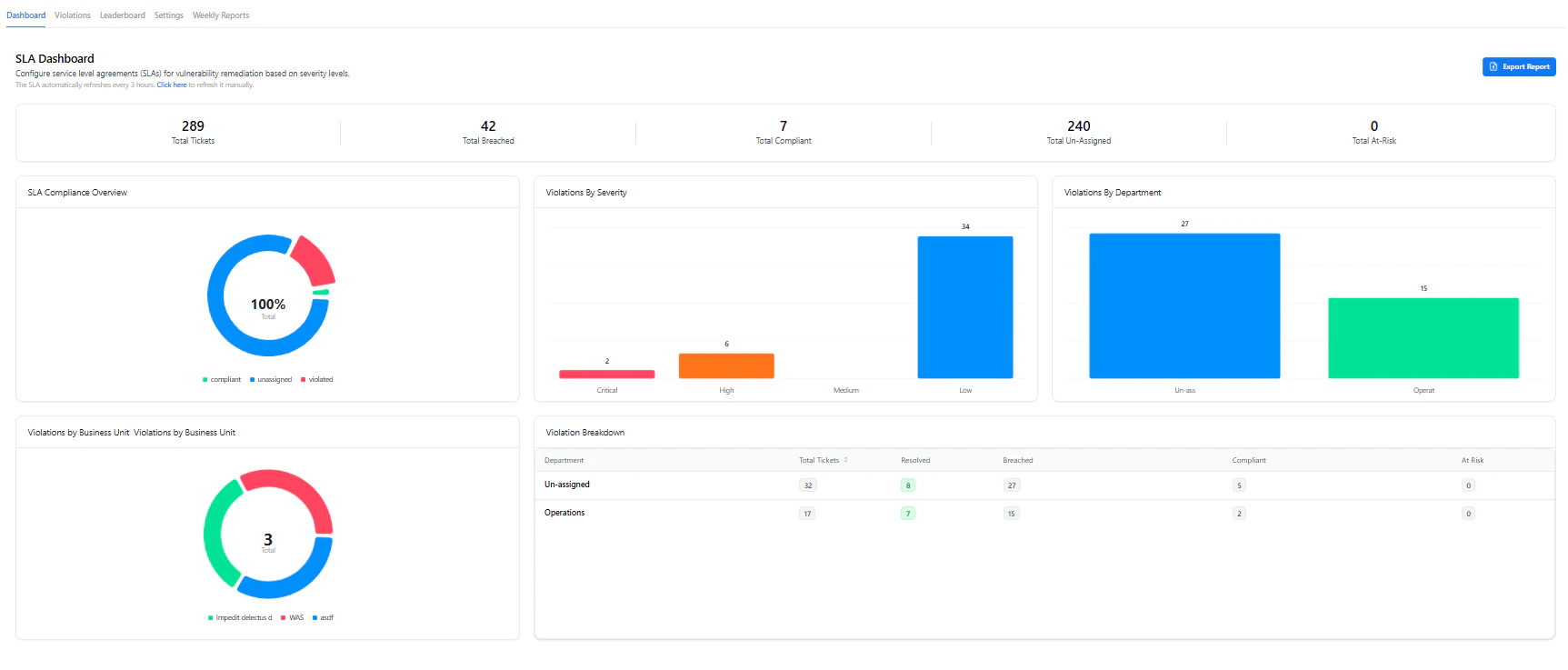
SLA Dashboard showing compliance overview, severity breakdown, and team performance
Overview
SLA Analytics provides a real-time view of how effectively your organization is resolving vulnerabilities within defined timelines. It transforms SLA tracking from a passive metric into an active operational system — helping teams identify breaches, enforce accountability, and continuously improve remediation performance. You can monitor:- SLA compliance across all vulnerabilities
- Breached and at-risk issues
- Team and owner performance
- Severity-based remediation trends
Every vulnerability is continuously tracked against SLA deadlines — ensuring zero blind spots in remediation timelines.
SLA Dashboard
The Dashboard gives a high-level snapshot of SLA performance across your organization.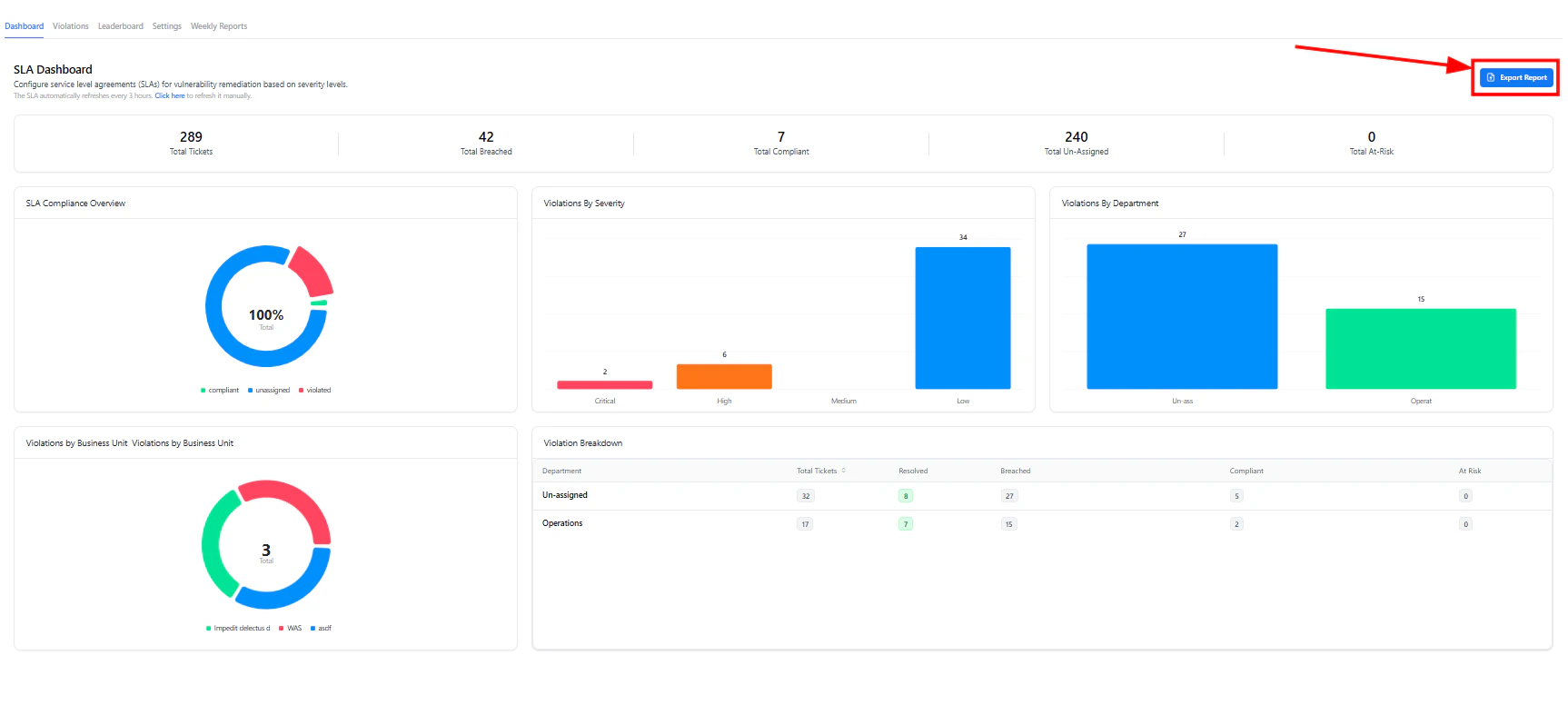
Top-level SLA metrics including total tickets, breached, compliant, and at-risk
Key Metrics
- Total Tickets — All tracked vulnerabilities
- Total Breached — Issues that exceeded SLA timelines
- Total Compliant — Resolved within SLA
- Unassigned — Vulnerabilities without ownership
- At Risk — Close to breaching SLA
Visual Insights
-
SLA Compliance Overview
- % of compliant vs breached vulnerabilities
-
Violations by Severity
- Identify which severity levels are failing SLAs
-
Violations by Department
- Understand which teams are lagging
-
Business Unit Breakdown
- Track SLA performance across organizational units
The dashboard refreshes automatically, ensuring decisions are always based on current data.
SLA Violations
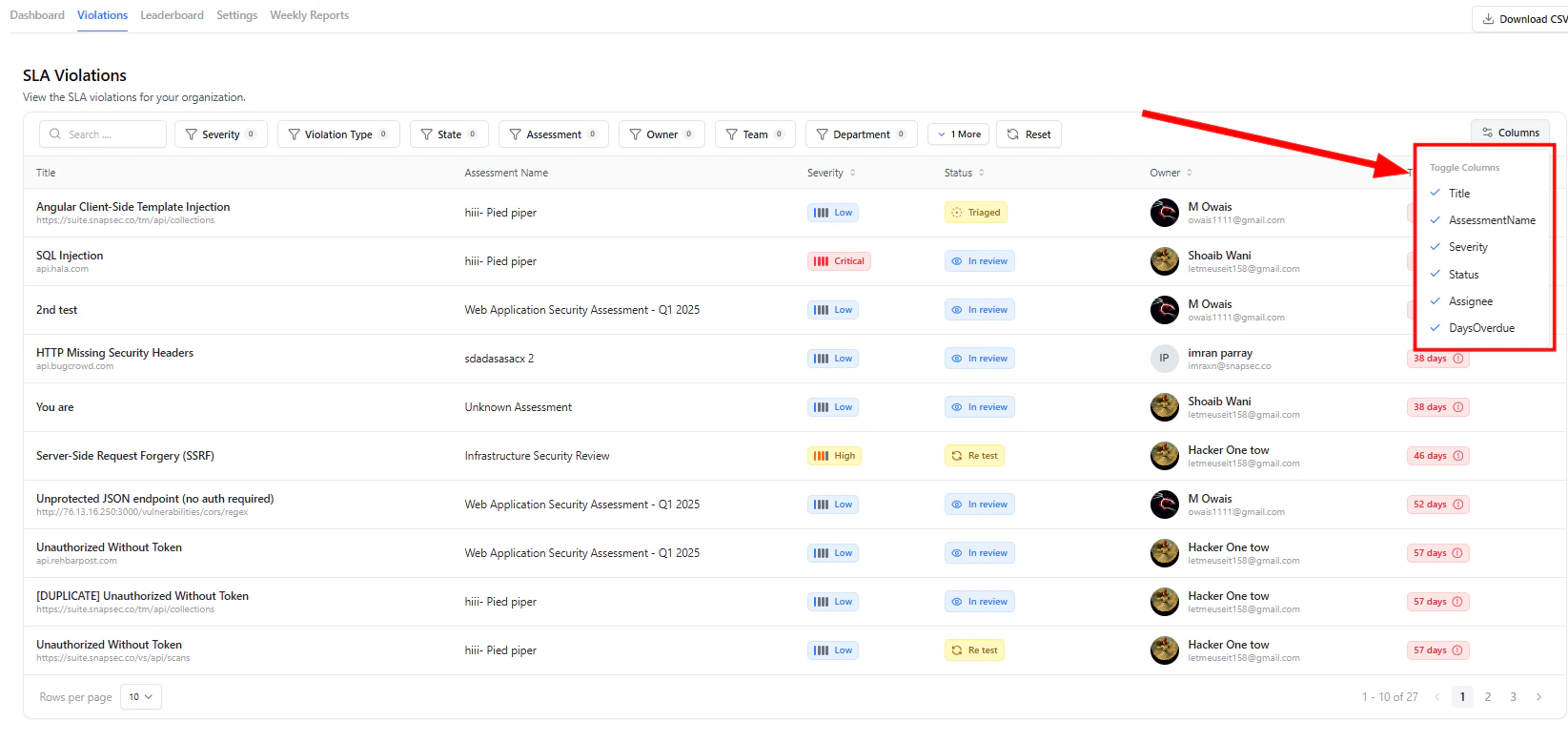
SLA violations table with filters, column controls, and CSV export
What You See
- Vulnerability title and source
- Severity and current state
- Assigned owner
- Time overdue (in days)
Powerful Controls
-
Advanced Filters
- Filter by severity, violation type, state, owner, team, department, and more
-
Column Customization
- Toggle visible columns for tailored workflows
-
CSV Export
- Download filtered data for reporting or audits
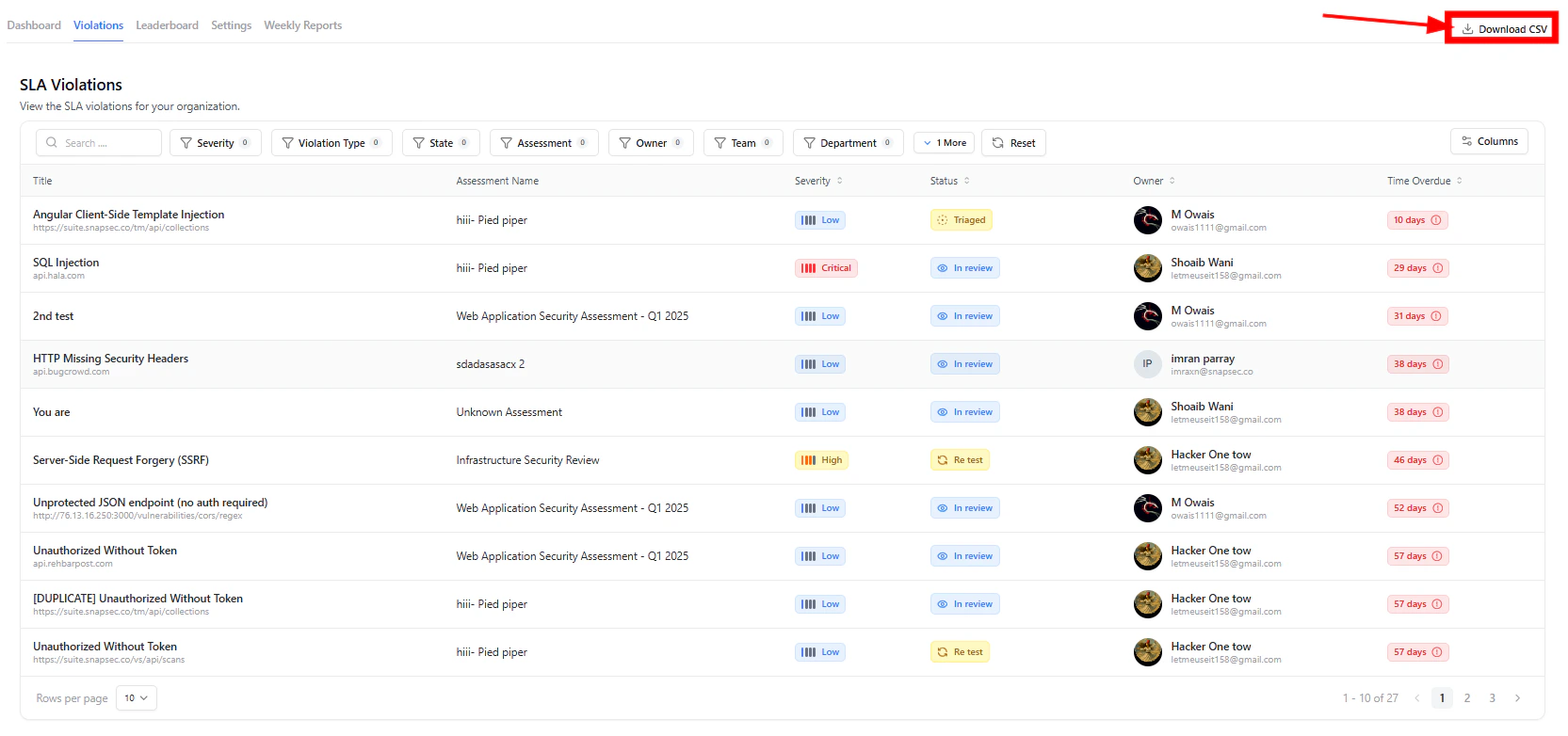
Column customization and CSV export options
Focus instantly on critical SLA breaches using filters — no need to scan large datasets manually.
SLA Leaderboard
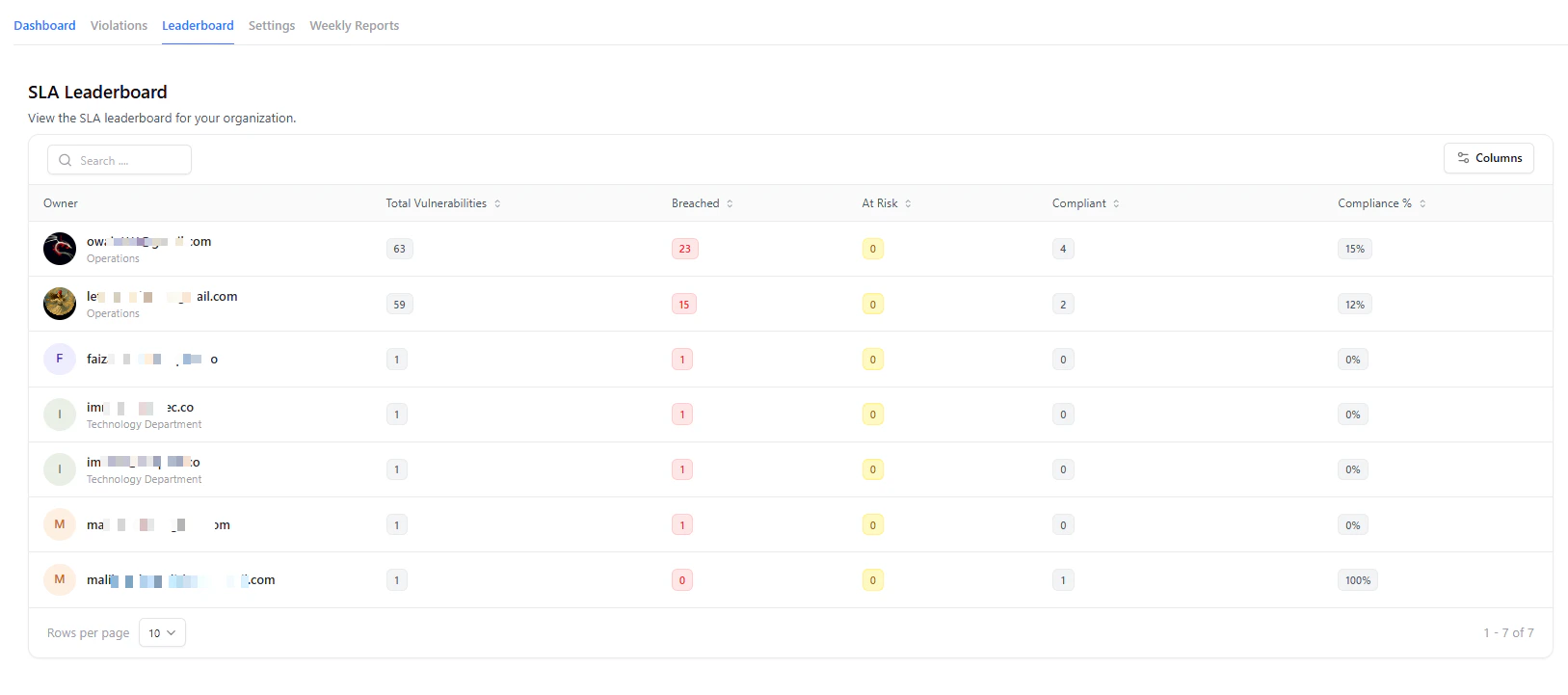
Leaderboard ranking users by SLA compliance and breach count
Metrics Tracked
- Total Vulnerabilities
- Breached
- At Risk
- Compliant
- Compliance %
- Identify high-performing teams
- Detect bottlenecks in remediation
- Drive accountability across owners
Turn SLA compliance into a measurable performance metric across teams.
SLA Configuration
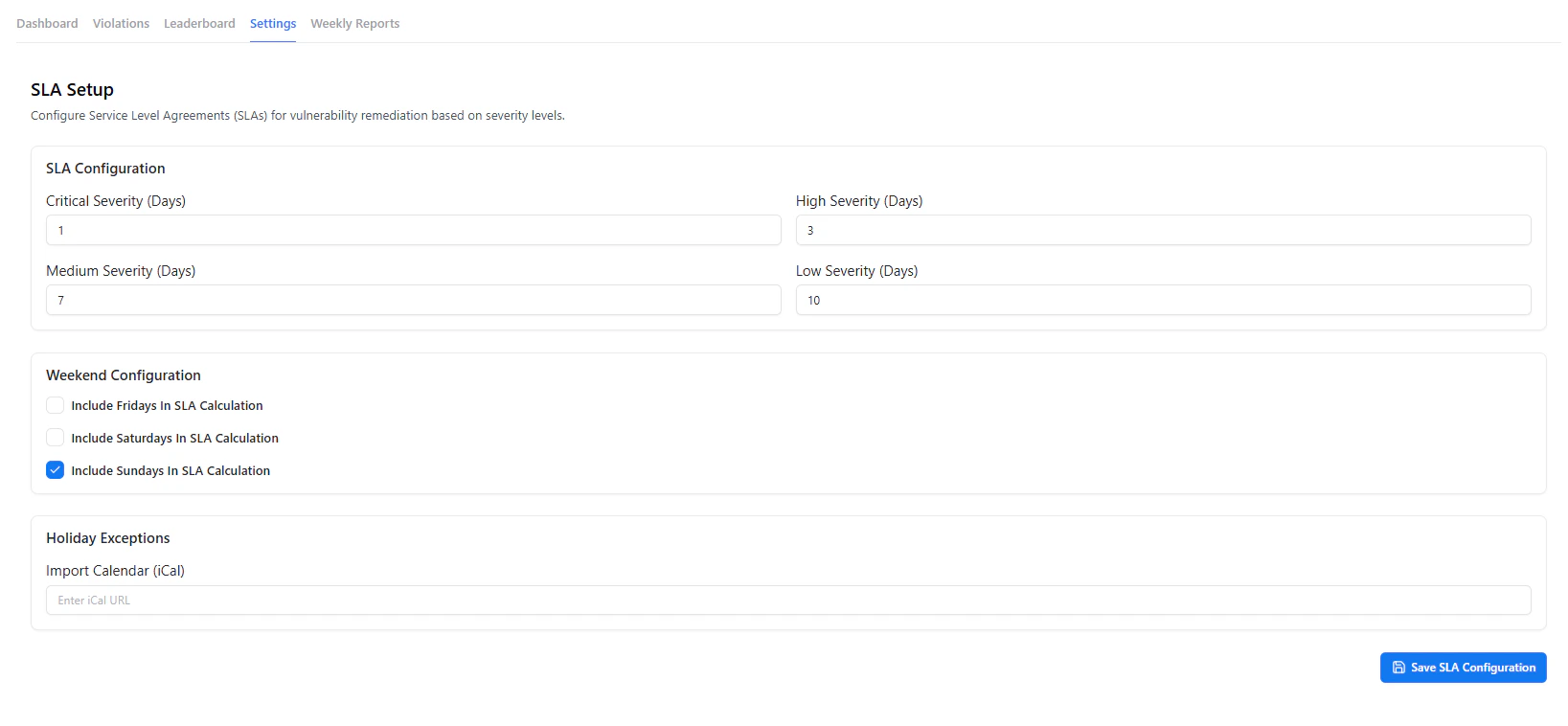
SLA settings for severity timelines and calendar configuration
Configuration Options
-
Severity-Based Timelines
- Set resolution deadlines for Critical, High, Medium, and Low
-
Weekend Inclusion
- Include or exclude specific days in SLA calculations
-
Holiday Exceptions
- Import iCal calendars to exclude non-working days
Weekly Reports
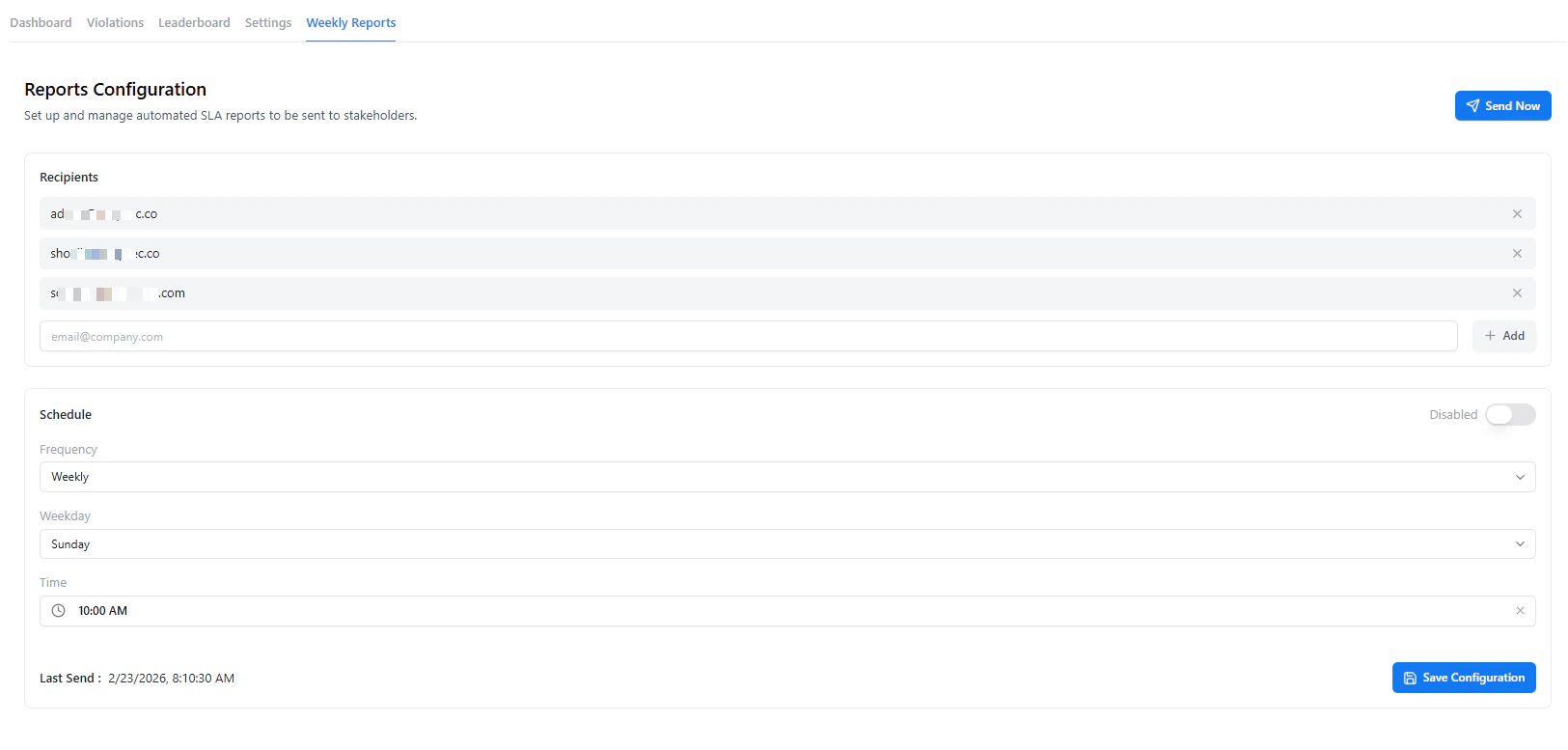
Weekly report configuration with recipients and scheduling
Features
-
Recipient Management
- Add multiple stakeholders
-
Flexible Scheduling
- Weekly frequency, day, and time selection
-
Manual Trigger
- Use Send Now for instant reporting
What Reports Include
- SLA compliance percentage
- Breached and at-risk vulnerabilities
- Severity breakdown
- Overall remediation performance
Keep leadership aligned with automated, consistent SLA reporting — no manual effort required.
Exporting Reports
You can export SLA insights at any time for audits or executive reporting.1
Open SLA Dashboard
Navigate to the SLA Dashboard section.
2
Click Export Report
Use the Export Report button to download structured data.
3
Analyze Data
Use exported data for compliance audits, leadership updates, or internal tracking.
Exported reports include organization-wide SLA metrics, breakdowns, and performance indicators.
Why SLA Analytics Matters
SLA Analytics helps organizations:- Prevent SLA breaches before they happen
- Improve remediation speed and efficiency
- Align security and engineering teams
- Provide audit-ready compliance visibility
- Eliminate manual tracking and reporting
Explore Live Demo
Explore VM Live — No Signup Needed
Experience real-time SLA tracking, violation management, and automated reporting — all in one unified platform.