

Overview
The URL Catalog provides a complete, continuously updated inventory of all discovered endpoints across your applications. It enables security teams to understand the real attack surface, analyze request behavior, and map vulnerabilities directly to endpoints.API Requests Inventory
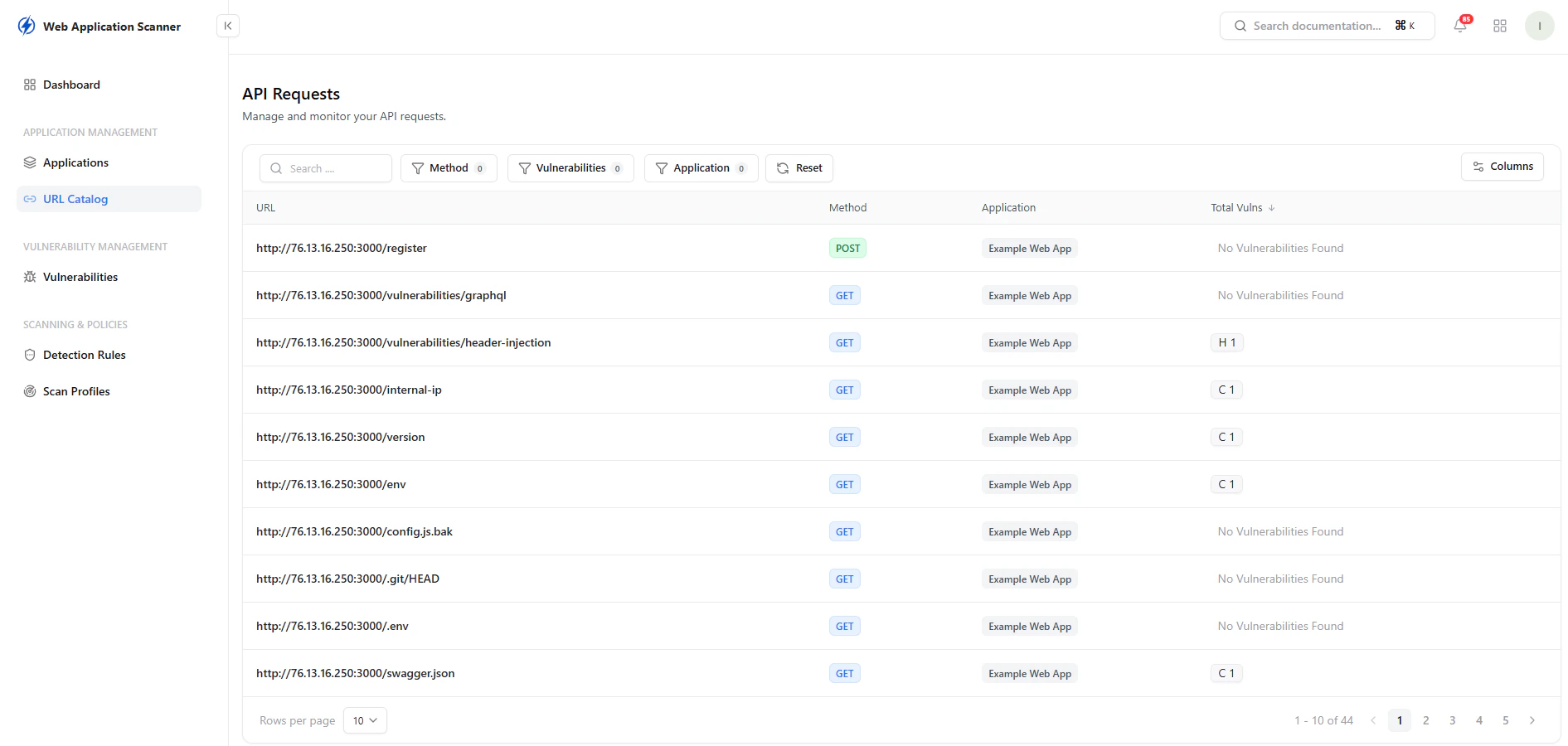
Centralized view of all discovered endpoints across applications
Key Capabilities
- Full endpoint discovery across applications
- HTTP method visibility (GET, POST, etc.)
- Application-level mapping
- Vulnerability association per endpoint
- Advanced filtering (method, vulnerabilities, application)
Endpoint-Level Intelligence
Each row represents a discovered endpoint enriched with security context:- URL — Full endpoint path
- Method — Request type (GET, POST, etc.)
- Application — Associated application
- Total Vulnerabilities — Vulnerability count per endpoint
Request Deep Dive
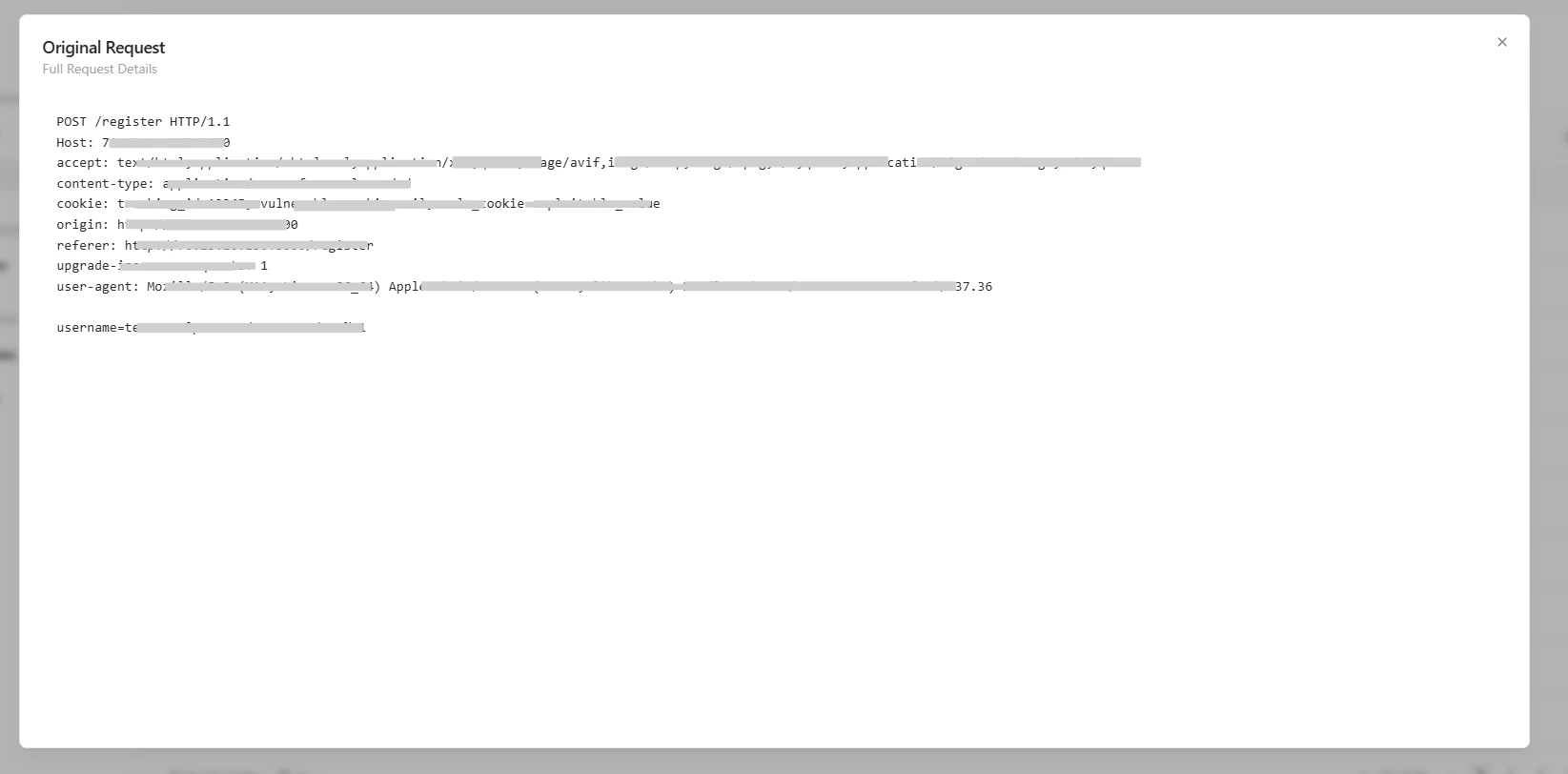
Inspect full request details for any endpoint
What You Can Analyze
- Full HTTP request (headers, body, cookies)
- Authentication context
- Payload structure
- Origin and referrer details
- Client behavior (user-agent, headers)
Why It Matters
Traditional scanners only show vulnerabilities.The URL Catalog shows where and how they exist.
Real Value
- Maps the true attack surface (including hidden endpoints)
- Enables targeted testing and validation
- Helps prioritize vulnerabilities by endpoint exposure
- Provides context needed to reduce false positives
- Bridges the gap between DAST and manual testing
Advanced Use Cases
Attack Surface Mapping
Identify all exposed endpoints, including undocumented or shadow APIs.Vulnerability Correlation
Link vulnerabilities directly to the endpoints where they exist.API Security Testing
Analyze GraphQL, REST, and internal APIs in a unified view.Threat Investigation
Inspect raw requests to understand how vulnerabilities are triggered.Explore Live Demo
Explore WAS Live — No Signup Needed
See how Snapsec URL Catalog gives you endpoint-level visibility and control over your application security.