

Business Units Overview
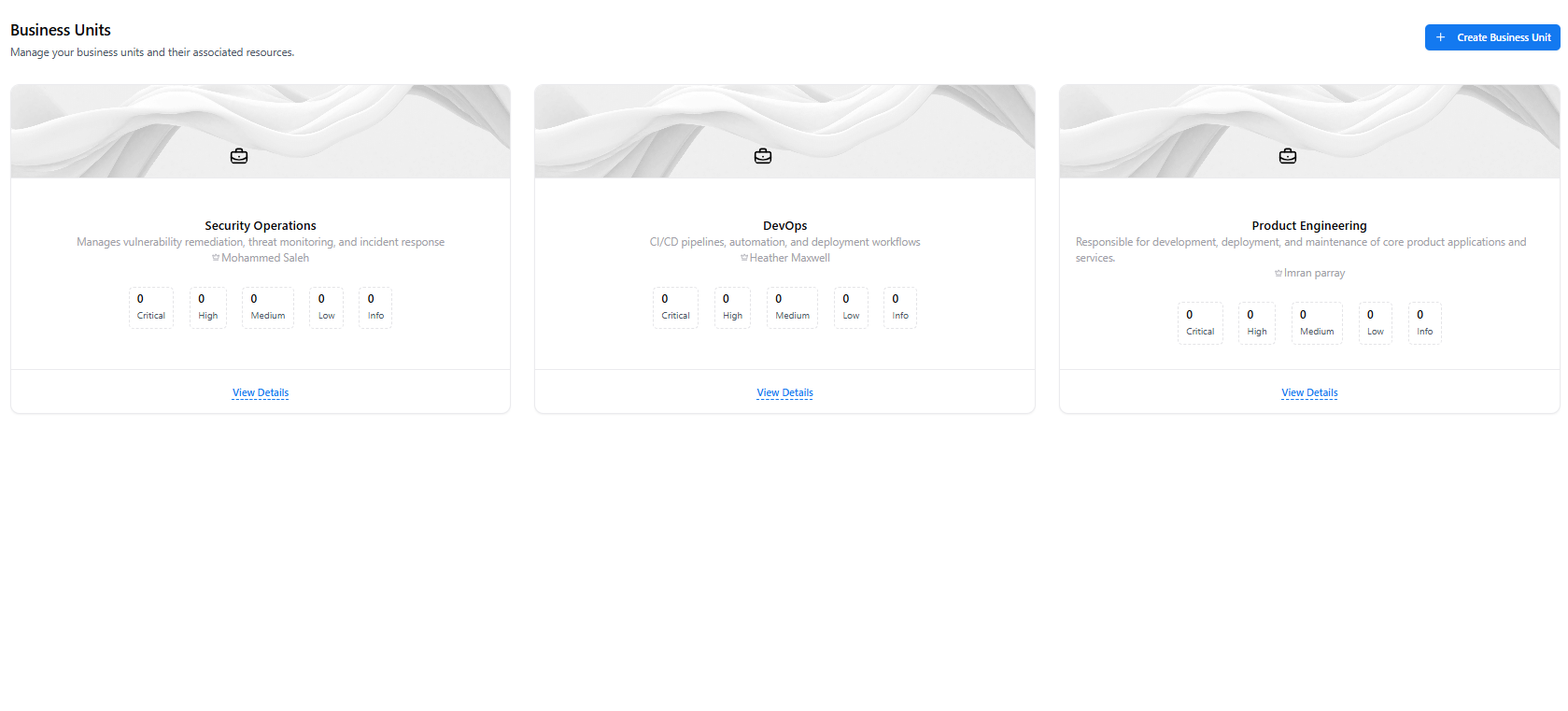
The Business Units dashboard provides a high-level view of all organizational units and their associated security posture.Each card represents a distinct business function, helping teams track ownership, vulnerability exposure, and assessment coverage.
Business Units Overview
What You Can See
- Business unit name and description
- Assigned owner
- Severity counters (Critical → Info)
- Quick access to detailed unit insights
Create a Business Unit
New business units can be created to align assets and assessments with organizational structure.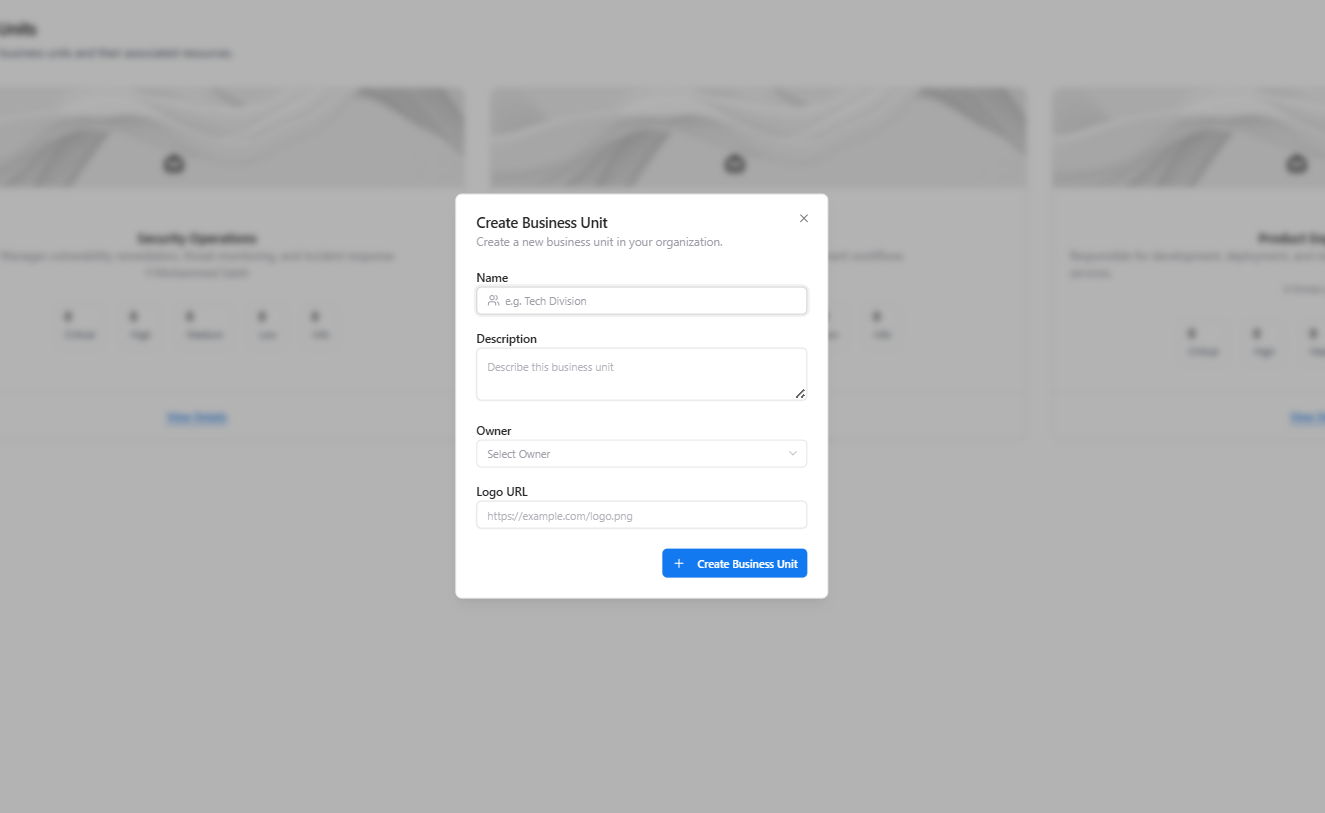
Create Business Unit
Fields Required
- Name — Business unit identifier (e.g., Security Operations, DevOps)
- Description — Purpose and responsibility of the unit
- Owner — Accountable person or team
- Logo URL (optional) — Visual identifier for the unit
Business Unit Details (Inside a Business Unit)
Clicking View Details opens the dedicated business unit page with summarized security metrics.
Business Unit Summary View
Summary Metrics Include
- Total Vulnerabilities
- Total Assessments
- Open Vulnerabilities
- Closed Vulnerabilities
- Average CVSS Score
Security Analytics & Associated Assessments
Scrolling further within a business unit reveals deeper analytics and assessment relationships.
Business Unit Analytics & Assessments
Available Insights
- Vulnerability Timeline — Historical view of detections over time
- Severity Distribution — Breakdown by Critical, High, Medium, Low
- Detections vs Resolutions — Measure remediation effectiveness
- Vulnerabilities by Status — Track lifecycle states (In Progress, Fixed, Resolved, etc.)
- Associated Assessments — Linked security assessments assigned to the unit
Example Use Cases
- Security Operations: Track remediation progress by team ownership
- Engineering Leaders: Understand which units generate the most risk
- Compliance Teams: Ensure every assessment is tied to a responsible unit
- Management: Gain visibility into organizational security maturity
Explore Live Demo
Explore AIM Live — No Signup Needed
Explore how Snapsec AIM organizes assets, vulnerabilities, and assessments using business units — all without creating an account.